I'm the writer & producer of the feature movies "DETOURS," which is available exclusively on Amazon Prime, and "Surviving Family," which is available on iTunes & Amazon Prime.
I blog about indie filmmaking, writing, and occasionally something tangentially related.
One of the great things about casting a movie in New York City is that
you have the opportunity to work with amazing actors who are more
frequently seen on stage than on screen. For Detours, one of the great actors who our casting director, Caroline Sinclair, reached out to was the wonderful Deirdre O'Connell. She plays Beth, the delightful woman who Dan Giraldi, played by Carlo Fiorletta, meets in a bar in Myrtle Beach, South Carolina.
Deirdre currently stars in the Labyrinth Theater Company production of Mona Mansour's play The Way West. The New York Times ran a wonderful feature story about her this past week, which discussed her tremendous body of work in the theater, especially as what they call a "melancholy mom." The full article is available here.
As wonderful as that play is - I saw it and she's amazing in it - it's terrific to have cast her in a role where she is beautiful and charming and happy. Click the link below to see some of it. Detours has its world premiere in April at the 11th annual Sunscreen Film Festival in Saint Petersburg, Florida.
I'm delighted that my new feature, Detours, will have its world premiere at the 11th annual Sunscreen Film Festival in Saint Petersburg, Florida.
The climactic final scenes of Detours were shot in and around Saint Petersburg and Tampa Bay, so it's wonderful to return there for our first ever public screening.
The Sunscreen Film Festival takes place Thursday April 28 to Sunday May 1. I'll share the screening date, time, and location as soon as they are available.
We had a great cast, crew, & special guests screening of Detours recently at Anthology Film Archives in Manhattan. It was the first time that I watched it with both a big screen & great Dolby sound together, and it was everything I'd hoped it would be. More importantly, the audience loved it, which was wonderfully rewarding for everyone involved. We're more excited than ever to share the movie at film festivals and then with the world as a whole.
Here are a few photos by Hank Gans.
At left: it was great to have actor & director Griffin Dunne join us; he's shown with Detours star and producer Tara Westwood.
My new feature, Detours, is a road-trip comedy. A newly single New Yorker must re-locate to Florida for her dream job; she drives south with her widowed dad, her mom's ashes in a coffee can, and a GPS with a mind of its own.
We shot the interiors in New Jersey and NYC, then went on the road to shoot exteriors through Myrtle Beach, SC; Savannah, GA; and Tampa, Florida. It was, to say the least, a daunting undertaking but an exciting one.
When we got a rough cut done, I reached out to a guy for whom I have a tremendous amount of respect - I'll leave him unnamed but he has a great deal of experience in many areas of the indie film world, ranging from micro-budget movies to some that are extremely well known. He graciously agreed to watch the cut with a group of us from the production team and give feedback.
I watched him watch the movie with my heart in my throat - would he love it? Hate it?
When it was done, he gave his verdict: great cast, awesome acting job across the board (yay!).
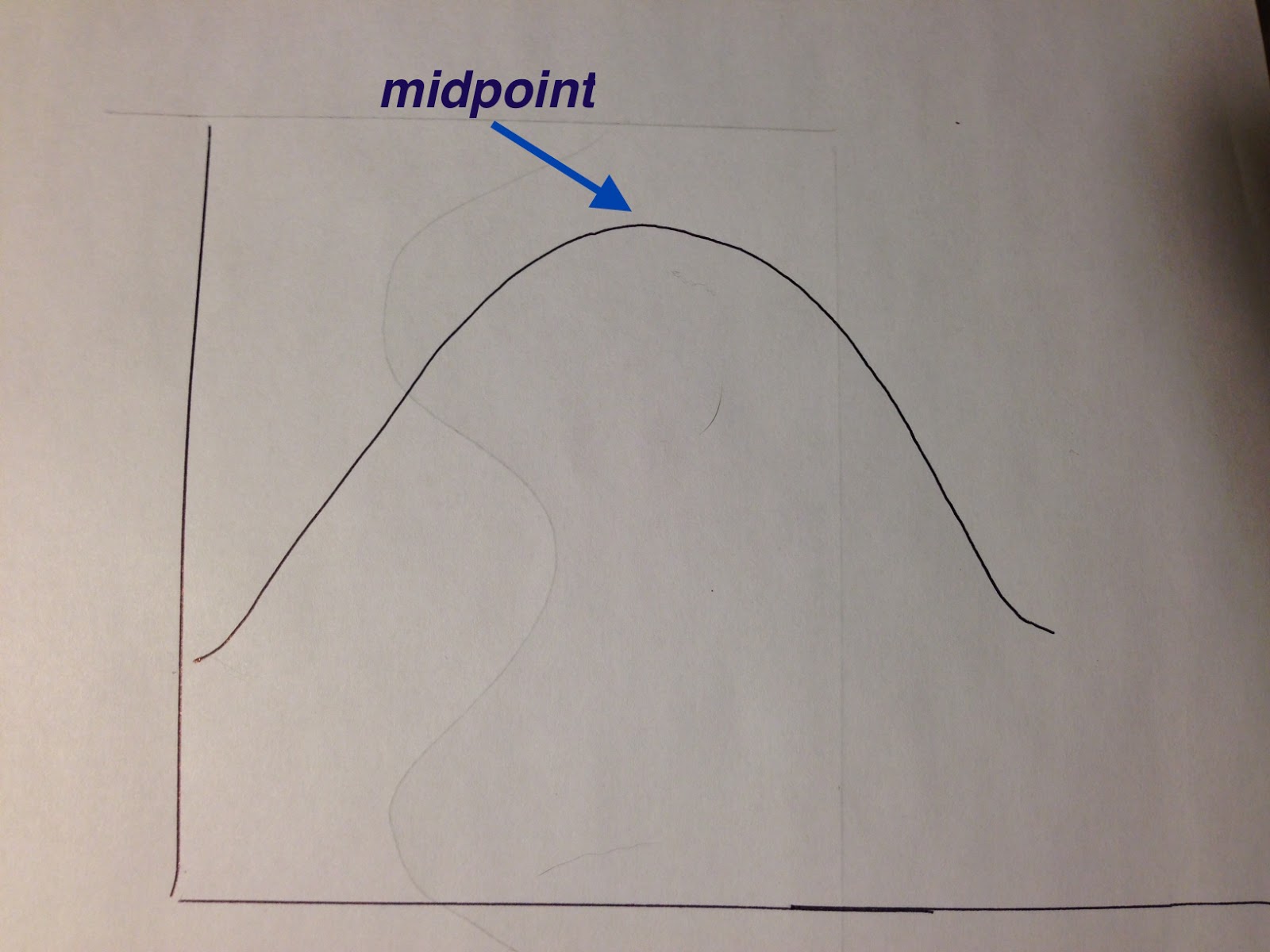
But the movie went like this
<<<<
While it should go like this
<<<<
I hyperventilated momentarily, then somehow sputtered out that I couldn't re-shoot: there was no budget for that. He assured me that there was no need for that - it was all there. "Think of it like a puzzle, and re-arrange the pieces."
I started to breathe again, as I realized what he meant, and had a flash as to how to do it.
The next morning, we figured out a new approach: front-load the darker segments of the movie, and move the happier ones - pointing toward the eventual resolution - after the mid-point. Fortunately the segmented way that the movie was written - a series of scenes and interactions that CAN be moved around - allowed us to do this.
We chose this scene as the mid-point: it's where Jennifer Giraldi (played by Tara Westwood) begins to find her way to happier times as her dad (Carlo Fiorletta) still struggles to find his footing. And the scenery (Myrtle Beach, SC) is beautiful.
If there's a moral to this story, it's this: a fresh look at your movie can be invaluable. And always be open to a new approach. OK that's 2 morals - sue me :)
With Christmas just around the corner, I'm postponing my 2nd post on "The Art of the Edit" until January. Instead, I want to share a few thoughts on one of my all time favorite movies Love Actually.
In case you've somehow managed to miss this 2003 movie, it's about 8 very different couples in the month before Christmas in London, who are all struggling with love and relationships. The great cast includes Hugh Grant, Billy Bob Thornton, Liam Neeson, Emma Thompson, Keira Knightly, Laura Linney, Rowan Atkinson, Billy Nighy, and many more. Writer/director Richard Curtis does an amazing job of interlocking the stories and characters; it truly takes multiple viewings to catch all of the ways that they show up in each others' stories.
Like all movies, it has its issues and odd points. One question/criticism that I've seen (and, admittedly, thought) is: what's up with the lobster in the nativity play?
The scene in question is between Emma Thompson's character Karen and her daughter Daisy:
Karen:
So what's this big news, then? Daisy:
[excited]
We've been given our parts in the nativity play. And I'm the lobster. Karen:
The lobster? Daisy:
Yeah! Karen:
In the nativity play? Daisy:
[beaming]
Yeah, *first* lobster. Karen:
There was more than one lobster present at the birth of Jesus? Daisy:
Duh.
After watching the movie for (probably) the 10th time a few nights ago, I realized (with a little help from my husband Carlo Fiorletta) that the point of this story is the teachers.
The climactic scene of Love Actually takes place at Daisy's school on the night of the
nativity play, as many of the characters converge there, including the Prime Minister (Hugh Grant). The school is central to the story, not a passing comment or thought.
There's a lobster (ok more than one lobster!) in the nativity play because Daisy's teacher wants to have all of the kids involved. Limiting the cast to the obvious characters (Jesus, Mary, Joseph, the Wise Men, a few camels) brings you up far short of the 20-30 kids in a typical elementary school class. So a creative teacher adds more....like a lobster or 3.
So hats off to all of the teachers who go the extra mile - and to the parents who make the lobster costumes!
Happy holidays, and best wishes for a wonderful 2016.
[Author's note: if you received this via email, you'll need to click the link and go to the website in order to see the video portion.]
As a screenwriter, I'd love to think that I have the most impact on a movie - after all, if I didn't write it, it wouldn't exist. Right?
The auteur theory presents the director as the creator of the movie.
In reality, the finished movie that you watch is made in the editing process. And the final product can be far from what was written and what was shot. In my first feature, Surviving Family, we split a major scene into 2 separate pieces to pick up the pace and bring a major character back on screen sooner. And in my 2nd, Detours, we re-arranged the order of many scenes to create a better story arc.
This post looks at the changes to Surviving Family; I'll look at the Detours changes next time.
The pivotal scene in Surviving Family comes roughly half way through the movie: the amazing Phyllis Somerville as Aunt Mary Giaccone explains to her niece Terry, played by the wonderful Sarah Wilson, why Terry's mother killed herself. It's an amazing and emotional scene, and many viewers have cited it as their favorite. But it's long, intense, and talky. Here's an excerpt:
In the original edit of the movie, that scene was followed by an equally good and intense scene between Terry and her ex-boyfriend, played by the terrific JD Williams, best known for his work in The Wire. Here's a brief clip from that scene:
But when we put the 2 scenes back-to-back, the sequence was (a) too long and talky and (b) left our wonderful leading man Billy Magnussen off screen for too long.
Director Laura Thies was the editor as well. After feedback from test viewers, Laura watched the 2 sequences many times. "What happened?" is said in each scene. She inserted a short scene to split the 2 long ones, which also brought Billy back into the sequence.
Here's the piece that she used as a bridge:
It worked beautifully. But if you want to see exactly how, you'll have to rent the movie for yourself - it's on Amazon Prime (free for members, starts at $2.99 for non-members) and on iTunes.